As we approach the three-year anniversary of BrewAI (and two years with a live product), I want to reflect on what it has meant personally and professionally, beyond any product pitch. If you want to know how our AI technology automates batch-level carbon emissions tracking for beverage producers and enables verifiable sustainability claims, you can contact the team directly. This post is about something else.
This wasn’t my first venture (nor Dr. Franziska Sohns’ or Lewis Walsh’s), but it was my first university spin-out, born from Anglia Ruskin University. The process has taught our commercialisation teams a huge amount about what building an AI-driven tech startup from academia actually looks like in practice. A genuine learning journey for all involved.
The Scaling Problem
As a renowned business magnate once noted: “Creating a prototype is easy; scaling to a business is orders of magnitude harder.” Indeed.
Securing investment for scaling while simultaneously building a client base, without unlimited funds, is genuinely daunting. Traditional venture capital suits most startups reasonably well, but in academia we largely rely on grants that demand concrete deliverables. Those conditions are poorly suited to agile, pivot-prone ventures with high failure risks. There’s a real structural mismatch there.
Fortunately, Innovate UK iCure and the EIT Food Seedbed Incubator turned out to be exactly the right kind of support for university spin-outs. I’m deeply grateful to their coaches and to the networks we built through both programmes.
Three Academics, One Startup
Internally, our trio of busy academics, juggling teaching and research alongside the startup, benefits from access to real expertise and institutional resources. The catch is that time constraints put a hard ceiling on our startup hours. If you follow BrewAI on social media, you may have noticed our nocturnal posting habits. Twilight is our prime time. Balancing parenthood and volunteering (Tesla Owners UK takes up more than I’d admit) amplifies all of this. We genuinely yearn for clones via genetic engineering.
The Intern Who Showed Us Up
Team expansion brought Mariia Kaliman on board as an intern, and I can’t stress enough how valuable that was. Her brilliance shone quickly. That said, sharing your “baby” with someone new, especially when your internal processes are, shall we say, organically structured, does induce a certain anxiety.
Introducing formal project management into an already chaotic environment was, in hindsight, a kind of productive madness. But it was also quintessentially BrewAI: spotting a problem, pivoting, and fixing it on the fly. That agile mindset is, I think, the thing most central to whatever success we’ve had.
Here’s to the Next Three
As we head into the next three years with version 2.0 and beyond, I’m genuinely optimistic about what research-driven technology can do when pointed at real societal challenges. We’re not there yet, but we’re closer than we were.
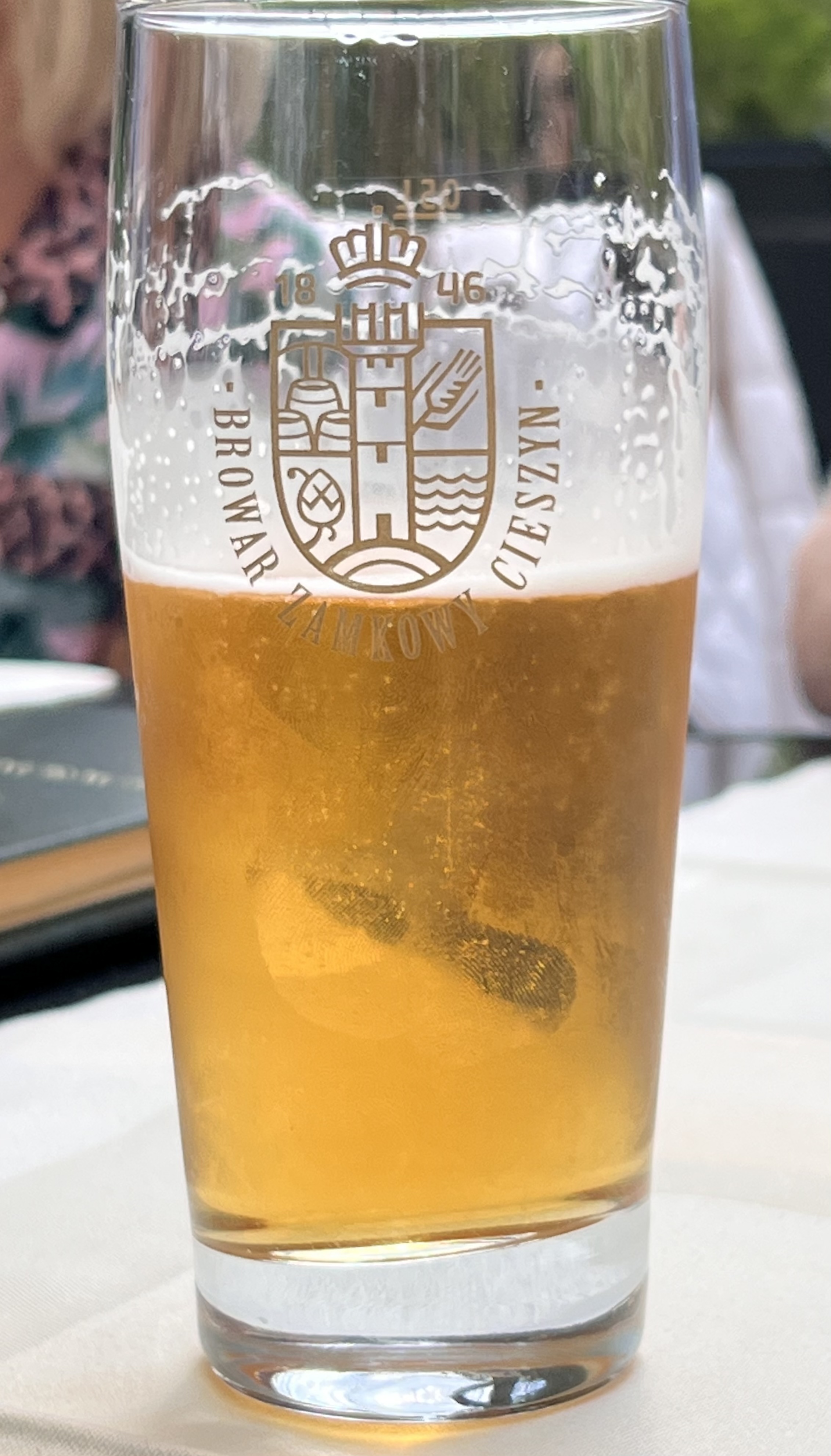
Let’s raise a glass to that. 🍻
Image: Beer glass of Castle Brewery Cieszyn, Poland, 2022 — Kgbo, Wikimedia Commons, CC BY-SA 4.0
