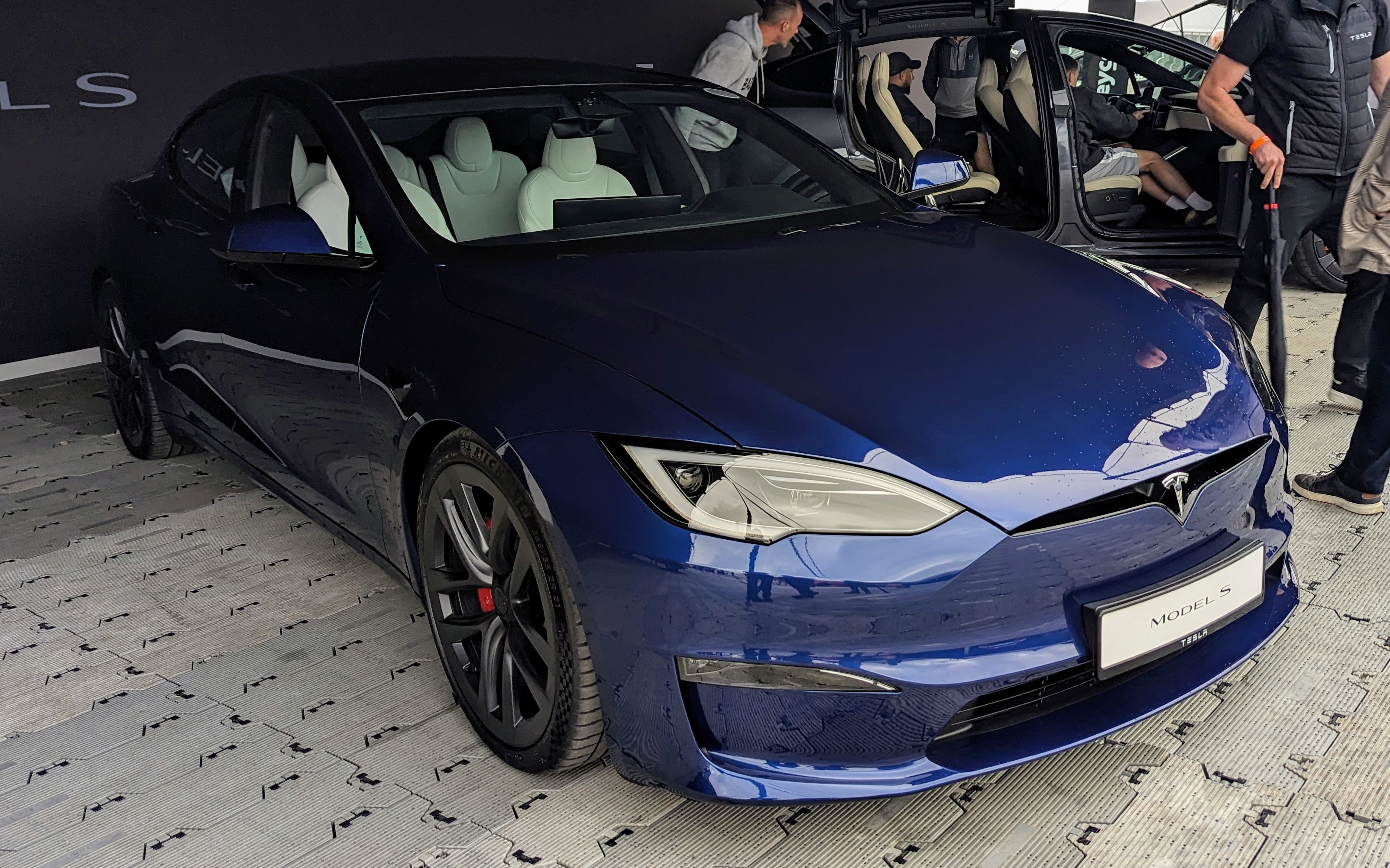
As a long-term Tesla enthusiast in the UK, I’ve owned several Model S variants over the years, starting with an older pre-Raven model. However, transitioning to the Palladium refresh, specifically the Model S Plaid, felt like a leap of faith. In 2025, after months of agonising over Facebook posts filled with warnings about left-hand drive (LHD) challenges on our narrow roads, I finally pulled the trigger. A couple of my from fellow owners from TOUK had made the switch, and so, heart in my mouth I purchased a two-year-old, low-mileage example directly from Tesla. At half the price of a new one, it was a steal — virtually pristine and backed by a three-year warranty, which made it comparable to other premium EVs on the market, and so at least I felt I was in safe hands.
The elephant in the room is the LHD configuration, especially for a car as wide as the Model S. Many club members swear they’d never go for it, citing tight British lanes and overtaking woes. I shared those fears initially, but after eight months and thousands of miles, it’s proven far less problematic than anticipated. Tesla’s camera suite is the key difference here, offering crystal-clear views that make manoeuvring intuitive, especially on the motorway and joining odd offset filter lanes. The Plaid’s blistering acceleration is stupidly fast, borderline illegal really, and it turns potential issues into non-events. Overtaking is effortless, and oddly, on left-hand bends with good visibility, you can peer up the inside of the vehicle ahead to plan your move safely. It’s transformed my daily drives from initially cautious to the most fun I’ve ever had in a car.
What I love most about the Plaid is its unapologetic performance. With the fastest Ryzen processor in any Tesla, the infotainment system is snappier than ever, handling software updates seamlessly. Hardware 4 (HW4) positions it for future Full Self-Driving (FSD) support, whenever it arrives in the UK(!). Compared with what I was going to buy (a Juniper Y), the Palladium feels genuinely premium: superior materials, larger screens, intriguing textures, and a more refined cabin. It exudes modernity, like the pinnacle of Tesla engineering, all for the cost of a Model Y Performance when bought used. The air suspension is sublime, gliding over potholes with poise that outshines my older S, and it’s surprisingly efficient too. Reliability has been stellar — aside from a few minor rattles, it’s been trouble-free.
Of course, no car is perfect. The LHD setup does require adjustment, particularly in urban settings, and let’s be honest, drive-through is a no-no (but it keeps you healthier!). Parts availability is a growing concern now that the Model S and X Palladium lines are discontinued globally. While Elon has assured ongoing support, the uncertainty lingers, especially for a UK owner far from Tesla’s core markets. Tyre wear is another gripe; this beast chews through rubber faster than my previous S, though the club’s tyre discount softens the blow. And the optional track package? It’s exorbitantly priced for a car at this performance level — something that feels like it should have been standard.
Looking ahead to 2026, if you’re eyeing an LHD Model S or X Palladium, I’d say go for it, certainly if you can snag one from Tesla’s certified pre-owned inventory. They’re rare gems now, and I timed mine perfectly in hindsight. The discontinuation complicates things, potentially impacting resale and long-term parts, but the value proposition remains strong for enthusiasts. As cool as the Cybertruck is, I believe Tesla erred in prioritising it over keeping the Plaid as their halo model — it’s the ultimate expression of a liveable, everyday supercar.
In the end, owning this LHD Plaid has reignited my passion for Tesla. It’s not just a car; it’s a statement. If you’re on the fence like I was, talk to owners who’ve made the jump. The rewards far outweigh the quirks.
Image: 2023 Tesla Model S Plaid — Wikimedia Commons, CC BY-SA 4.0
