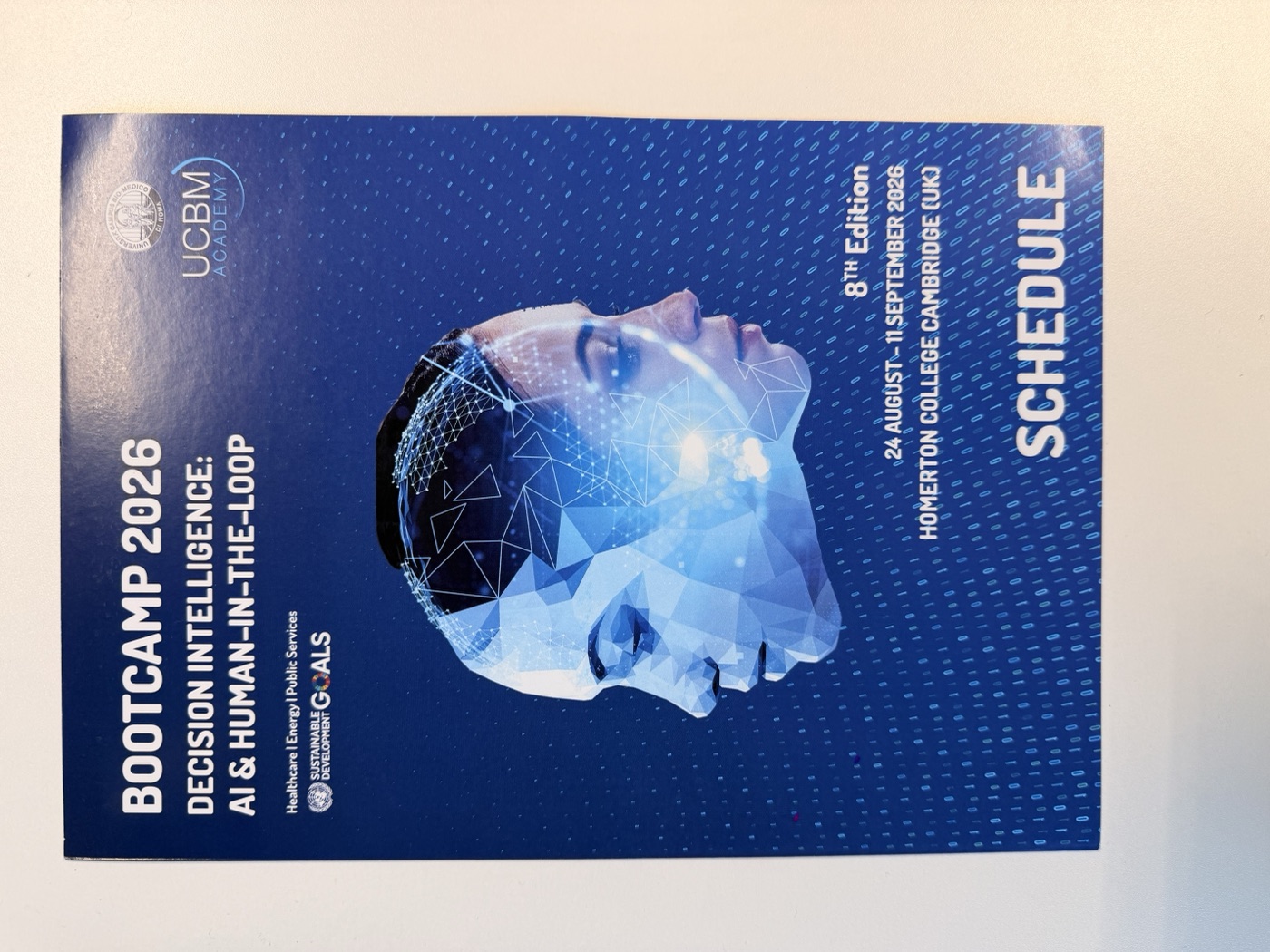
Last week I had the pleasure of joining the judging panel for the UCBM Academy AI bootcamp at Homerton College, University of Cambridge, thanks to an invitation from my colleague Gamze Saglam. I came away impressed by the students, proud of our contingent from ARU, and feeling rather more optimistic about where some of this technology might take us.
Having helped turn university research and ideas into businesses through Learnometer and BrewAI, I have a particular affection for this stage of the journey. There is something lovely about seeing people work out that an idea might actually become something useful. Experience also gives you a healthy respect for the distance between a convincing presentation and a working business. The phrase “and then we’ll scale it” can conceal a quite remarkable amount of work - trust me - I know!
The bootcamp’s theme was Decision Intelligence: AI & Human-in-the-Loop. That last bit is the really interesting part for me.
When we talk about humans being “in the loop”, we often give ourselves a fairly narrow job description. We write the code, label the data, or rate an LLM’s answers through reinforcement learning from human feedback, mercifully shortened to RLHF. Even the driving data behind systems such as Tesla’s FSD draws on human experience. Once the system is running, perhaps we get to check its work and intervene when something goes wrong.
All valuable contributions. But there is a much wider role for people in deciding how AI becomes part of society: identifying worthwhile problems, shaping the services built around it, deciding what success means, and challenging decisions that make perfect sense to a model but very little sense to the person affected.
You don’t need to be able to train a neural network to have something essential to contribute to that conversation.
What impressed me about the students was how deeply they had thought about this. Their ideas gave people meaningful roles in how the technology would be used and how its benefits might reach a community. There was an understanding that adoption involves trust, relationships and behaviour, alongside whatever clever thing the software happens to be doing.
As someone who works across technology and business education, that was particularly encouraging. Getting those things to work together is a substantial part of the challenge.
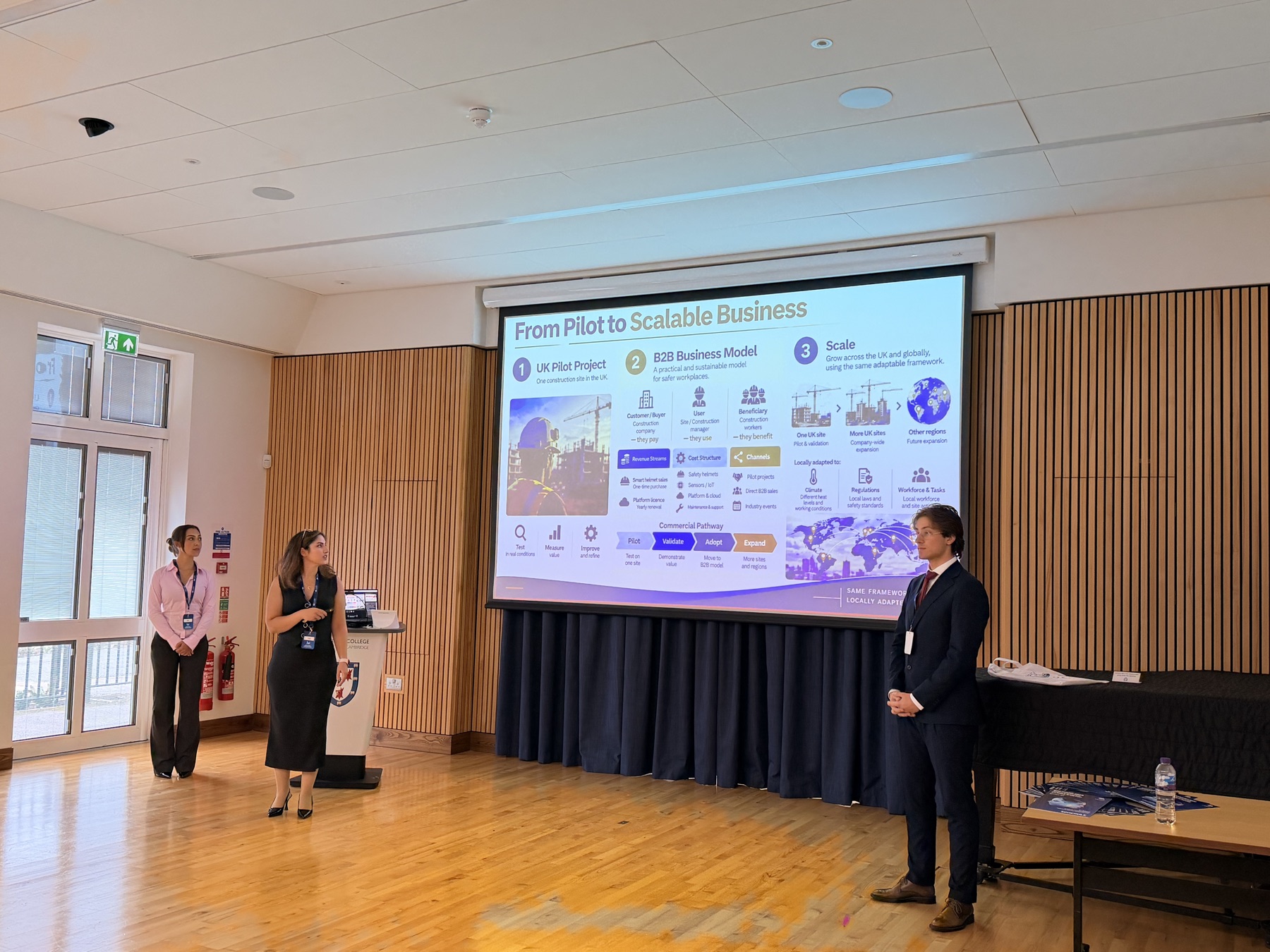
It also made a refreshing change from the familiar “AI will kill us all” end of the conversation. There are serious questions about AI that deserve serious attention, as I’ve written about before. But the prospect of helping someone find suitable work locally tends to receive rather less airtime than the prospect of civilisation ending. Admittedly, it is harder to illustrate with a menacing robot.
The projects involving edge AI particularly caught my attention. These explored how AI could complement very human activities, including finding work within a local community, without making a large language model the answer to every question.
Edge AI means running AI on a device, or close to where the data is produced. Language models can run there too; “edge” describes where the processing happens. What appealed to me in these ideas was the use of focused capabilities for particular problems, with human knowledge and judgement remaining central.
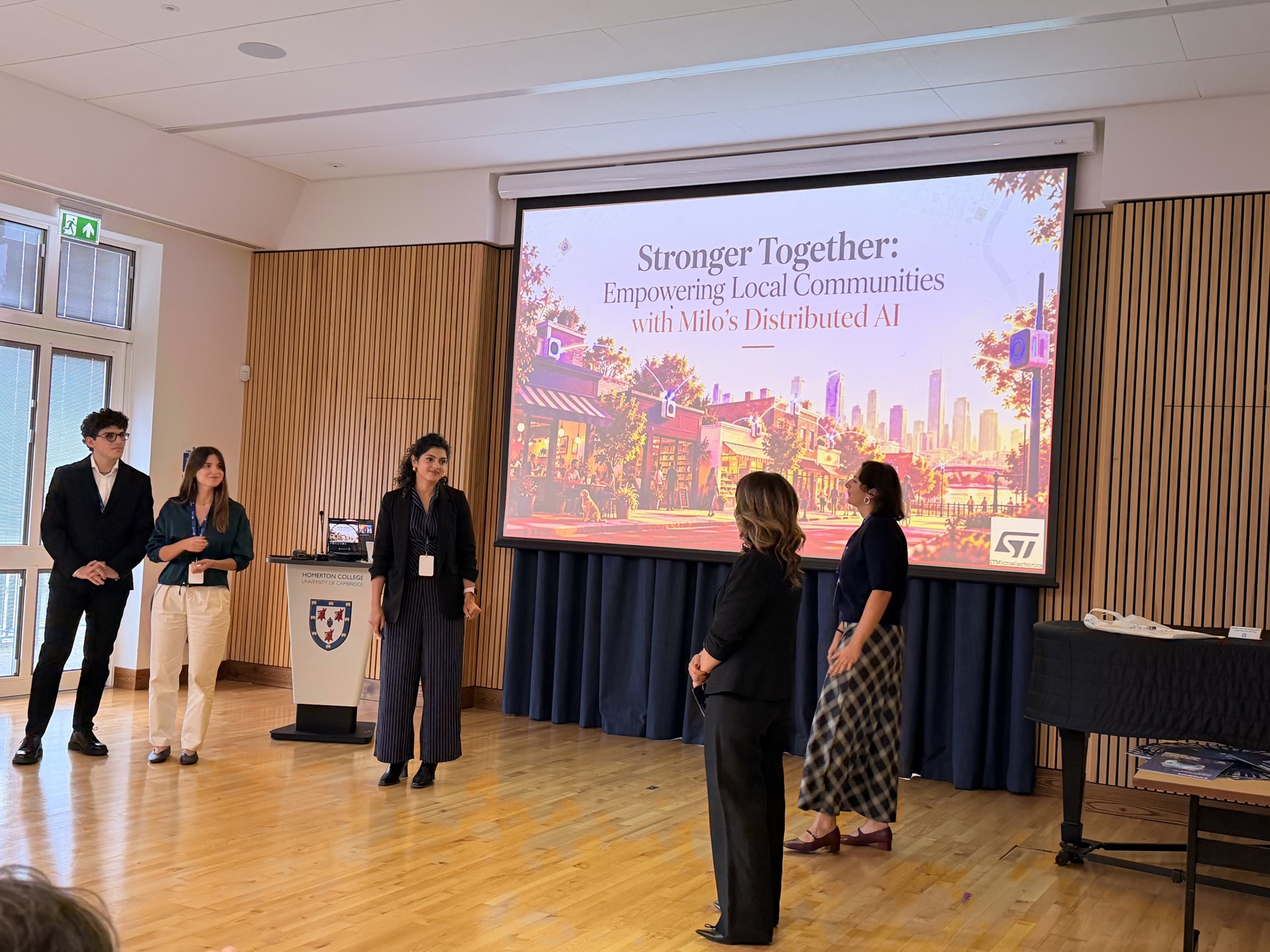
Take finding a job locally. A useful match involves more than comparing the words on a CV with the words in a vacancy. There are working hours, caring responsibilities, transport, confidence, and skills someone may possess without knowing how to describe them. A job three miles away can be practically inaccessible if the shift starts before the first bus.
AI could help make connections that would otherwise be missed. People understand what those connections mean, can spot what the system has overlooked, and can help shape it around the realities of their lives. That is a much richer relationship than simply accepting whatever appears on a screen.
There is also something slightly peculiar about carrying increasingly capable AI hardware around in our pockets while instinctively sending our AI requests off to a distant data centre. Many phones already contain hugely powerful neural processors. They are doing useful work in features such as photography and face recognition, and there is considerable scope to build further on that capability. Apple’s work on its Neural Engine offers one example of what is possible on the device itself.
For suitable tasks, local processing can keep more data on the device and reduce dependence on a continuous connection. The hardware is already there. The interesting work is deciding what useful things to do with it.
Of course, putting a model on a phone doesn’t automatically give the person holding it more influence. That depends on how the service is designed, who sets its priorities, and whether people can question or change what it does. This is where the students’ attention to the human side mattered so much.
To me, these ideas also connect with an older ambition for computing. Back in 1960, J. C. R. Licklider’s work on human-computer symbiosis envisaged people setting goals and evaluating outcomes, with computers helping them think and make decisions more effectively. There has always been a strong tradition of asking how computing can extend human capability. Some of what I saw at the bootcamp felt very much in that spirit, applied to the devices and communities we have today.
And then there was the particularly pleasing ARU part.
Our students represented us brilliantly. One of our own MBA students was part of the winning team and delivered a presentation that was better than many pitches I’ve seen in some very serious commercial settings. I’ve sat through enough of those to make the comparison with some confidence. It was an impressive performance, and a very proud moment for those of us from ARU (if you’re reading this, you know who you are!)
Watching the next generation begin a journey I know something about was a pleasure in itself. Seeing them think so carefully about the people who might benefit from their ideas made it better still.

Thank you to Gamze for inviting me, to the organisers (especially Claudia Peverini) for bringing everyone together, and especially to the students for giving us so much to think about. I spend plenty of time getting excited about what the technology can do. It was good to spend an afternoon getting excited about what people might choose to do with it.